
If you’ve been dealing with missing teeth and seeking a reliable solution, you’re in the right place. Dental implants have gained immense popularity in recent years as one of the best options for replacing missing teeth. Whether it’s a single tooth or multiple ones, dental implants offer a permanent solution that not only restores your smile but also improves your overall oral health. So let’s dive into the incredible benefits of dental implants and discover why they are considered superior to other alternatives out there!
Benefits of Dental Implants
There are numerous benefits to opting for dental implants when it comes to replacing missing teeth. Unlike traditional dentures or bridges, dental implants offer a long-term solution that mimics the natural look and feel of your own teeth.
One major advantage of dental implants is their durability. Made from strong titanium material, these implants are designed to last a lifetime with proper care. This means you don’t have to worry about replacements or adjustments down the line, saving you time and money in the long run.
Another benefit is improved oral health. Dental implants not only fill in gaps left by missing teeth but also help preserve the integrity of your jawbone. When a tooth is lost, the underlying bone can deteriorate over time. By placing an implant directly into the jawbone, this stimulates bone growth and prevents further bone loss.
In addition to enhanced oral health, dental implants also provide better functionality compared to other alternatives. With dentures, there’s always a risk of slippage or discomfort while eating or speaking. However, dental implants fuse with your jawbone and become part of your natural anatomy, ensuring stability and comfort during everyday activities.
Furthermore, dental implants offer aesthetic advantages as well. They closely resemble real teeth in terms of color and shape, giving you a seamless smile that boosts confidence levels.
The Procedure: How Dental Implants Work
First and foremost, let’s demystify the process of dental implants. It all begins with a thorough examination by a qualified dentist who will assess your oral health and determine if you are a suitable candidate for this procedure.
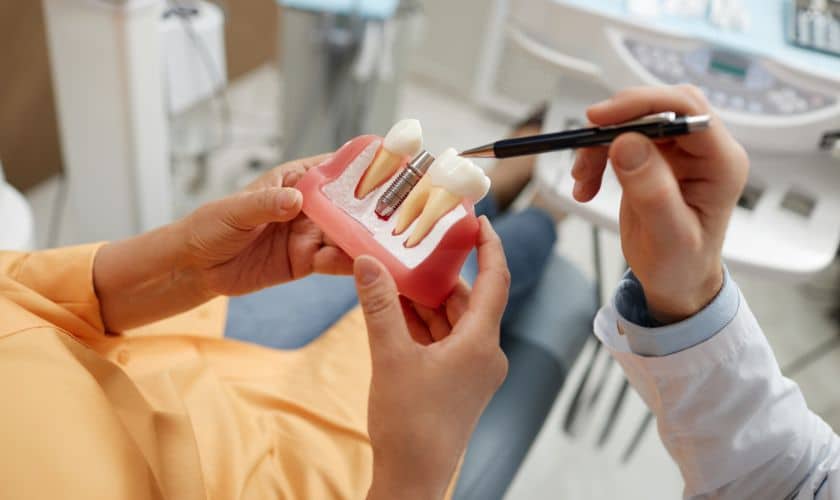
Once it is determined that dental implants are the right option for you, the next step involves placing small titanium posts into your jawbone to serve as artificial tooth roots. This may sound intimidating, but rest assured that it is done under local anesthesia, ensuring minimal discomfort during the procedure.
Over time, these titanium posts fuse with your natural bone through a process called osseointegration. This provides a strong foundation for the replacement teeth or crowns that will be attached later on.
After the initial healing period, which typically takes several months, impressions of your mouth will be taken to create custom-made replacement teeth or crowns. These prosthetic teeth are designed to blend seamlessly with your existing teeth in terms of both appearance and functionality.
Once everything is ready, your dentist will attach these new teeth securely onto the implanted posts. The end result? A fully restored smile that looks and feels natural!
Remember though, every patient’s journey may vary slightly depending on their unique circumstances. Therefore, it’s important to consult with a professional to get personalized advice tailored specifically to you.
The Bottom Line
Dental implants offer the best solution for missing teeth due to their numerous benefits and effective procedure. With dental implants, you can restore your smile, improve your oral health, and regain the function of your natural teeth.
Unlike other tooth replacement options like dentures or bridges, dental implants provide a long-lasting solution that looks and feels just like real teeth. They are durable, stable, and designed to withstand daily use without slipping or shifting.
Moreover, dental implants help preserve the integrity of your jawbone by stimulating bone growth through osseointegration. This not only maintains facial structure but also prevents further bone loss commonly associated with missing teeth.